Showing posts with label eric barker. Show all posts

Thursday, 16 January 2020

Imposter syndrome (another interesting article by Eric Barker)

This Is How To Overcome Impostor Syndrome: 4 Secrets From Research

by Eric Barker

Impostor Syndrome is like being a secret agent -- in the most depressing way imaginable.

No matter how hard you work, no matter how much you achieve, you still feel like a fraud. You still question your ability and you're waiting to be exposed. More formally, it's often referred to as "a failure to internalize success." You attribute your accomplishments to luck or insane amounts of effort, but never talent or skill.

Ask yourself these questions:

From The Secret Thoughts of Successful Women: Why Capable People Suffer from the Impostor Syndrome and How to Thrive in Spite of It:
  • Do you chalk your success up to luck, timing or computer error?
  • Do you believe “if I can do it, anybody can”?
  • Do you agonize over the smallest flaws in your work?
  • Are your crushed by even constructive criticism, seeing it as evidence of your ineptness?
  • When you do succeed, do you secretly feel like you fooled them again?
  • Do you worry that it’s a matter of time before you’re “found out”?
If you're nodding your head, you're not alone. 70% of people have felt it at one time or another -- with some experiencing it chronically. And some very big names have been afflicted with it:

Albert Einstein:

...the exaggerated esteem in which my lifework is held makes me very ill at ease. I feel compelled to think of myself as an involuntary swindler.
Maya Angelou:

I have written eleven books, but each time I think, “Uh-oh, they’re going to find out now. I’ve run a game on everybody, and they’re going to find me out.”

I can only dream that I will one day reach their level of astounding fraudulence. Jeez, look how inferior my fraudulence is to theirs. I'm a fraud at being a fraud... Seriously, there's a lesson here: these two make it abundantly clear that no amount of achievement is going to convince you. That approach won't work.

And much of the advice we get isn't helpful either. Merely "telling yourself you're good enough" has all the scientific rigor of a Hallmark Card. Self-affirmations are as likely to cure this as they'd cure baldness. We need real answers, not platitudes.

Funny thing is there's a whole pile of scientific research that addresses this issue. It's called "self-efficacy." The concept was coined by Albert Bandura. He's widely considered the most influential living psychologist and one of the most cited of all time. If there was a Mount Rushmore for psychology, his face would be up there. Bandura's book is Self-Efficacy: The Exercise of Control.

Now I hate when people use phrases like "learning your own value" because while it sounds really nice, nobody explains how to actually do it.

Time to roll up your sleeves, bubba. We're gonna fix that.

Let’s get to it...


So What The Heck Is Self-Efficacy?


It's “perceived ability to succeed at a given task.” It's a belief, not an objective measure of ability. But it’s a thermonuclear powered belief and has an eye-popping effect on your life, whether you know what it is or not.

From Self-Efficacy:

Perceived self-efficacy refers to beliefs in one’s capabilities to organize and execute the courses of action required to produce given attainments… People’s beliefs in their efficacy affect almost everything they do: how they think, motivate themselves, feel, and behave.

It can even be more important than skill. No doubt, actual skills are critical. If you have self-efficacy but no real driving ability, I'm not getting in your Uber. But that said, if you don’t believe you can accomplish something, you probably won’t try. And even if you do try, when you meet resistance, you’ll give up.

And the effects of self-efficacy beliefs have been found in a staggering number of diverse arenas: academic grades, weight management, social behavior, health habits, occupational performance, etc.

From Self-Efficacy:

Where performance determines outcome, efficacy beliefs account for most of the variance in expected outcomes. When differences in efficacy beliefs are controlled, the outcomes expected for given performances make little or no independent contribution to prediction of behavior.

"Oh, so it's self-esteem and confidence."

That's not what I said. Don't put words in my mouth... Um, actually, I just put words in your mouth.  ANYWAY, point is, self-efficacy is distinct from self-esteem and confidence, otherwise I promise I'd be writing a post on self-esteem and confidence because explaining new words is hard when old ones work fine.

Self-efficacy is your belief about your ability to accomplish a specific goal while self-esteem is a judgment of personal worth. My self-efficacy about my ability to eat ice cream might be high, but I don’t think that makes me a good person. And confidence is more generalized, while self-efficacy is task-specific. You can be a very confident person and still not have self-efficacy when it comes to performing an appendectomy.

So how does this relate to impostor syndrome? Well, impostor syndrome is fundamentally a belief issue. You could be saying, “I don’t have impostor syndrome, I actually suck at this and my results confirm that.” Instead, you're saying, "I'm aware my performance is solid but I don't believe it's due to talent."

Impostor syndrome is about your lack of belief in your skill at something. Having self-efficacy is a healthy amount of belief in your skill at something. If we increase the latter, we get rid of the former. We need to get you to believe that your ability -- not luck or mere hard work -- is the primary active ingredient in your success.

So how do we do boost self-efficacy? Bandura lays out 4 things that will do the job. They all have big, fancy academic sounding names that make my spellchecker go heavy on the red underlining. We're gonna translate them in to English-that-people-actually-speak because I don't like migraines any more than you do.

Let's start with the one that is, in general, most powerful...


1) Enactive Mastery Experience


When most people perform well they attribute it to skill on their part. (Maybe they are too inclined to attribute it to personal skill, but that's a topic for a different, much more cynical post.)

But if you're dealing with impostor syndrome, this natural tendency to assume you're a virtuoso is on the fritz. You do a great job and the default attribution bucket isn't skill -- it's luck, overwork or invisible elves that accomplished everything while you were napping.

Many interpret enactive mastery experience as "keep working hard and you'll see it's your natural ability that's causing the results." If that was true, impostor syndrome wouldn't exist. In fact, if you don't actively change your default attributions, merely seeing yourself succeed isn't going to fix impostor syndrome -- it's going to make it worse.

From Self-Efficacy:

...the impact of performance attainments on efficacy beliefs depends on what is made of those performances. The same level of performance success may raise, leave unaffected, or lower perceived self-efficacy depending on how various personal and situational contributors are interpreted and weighted (Bandura 1982a).

So what do we have to do? You need to notice the system you use. Your process. Yes, you have one. No, I have not been spying on you.

You probably take it for granted. Or it's a blur as you anxiously drive yourself crazy due to deadlines or trying to meet insanely high standards. It's probably habitual at this point and therefore often subconscious, like driving a car, but there are things you do each and every time that are producing these consistently good results. (And if you're not consistently getting good results then you don't have impostor syndrome, and I'm not getting in your Uber.) Everyone does not do these things you do in your process and that's one of the reasons not everyone gets the results you do.

Look at the system as separate from you. Like the recipe that makes a good cake. When you have a solid recipe, or good instructions, you feel in control. And what's control? It's the exact opposite of luck. When you recognize that you have a system, and the system is producing those results consistently, the depressing magical thinking of impostor syndrome fades. You have a new "why" that's responsible for those solid results.

What would your reaction be if I told you, "I took 10 weeks of tennis lessons and my tennis luck increased dramatically!" You'd laugh. Systems and training don't increase luck. They increase skill. You're just not noticing or acknowledging the system you use. (And if I was your system I'd be pissed that Mr. Luck and Ms. Overwork were undeservedly getting all the credit around here.)

When work is a blur it's easy to think you just got lucky. But I'm guessing you've noticed that people who are very confident about their abilities can often explain them to you. They're aware of their system. Step outside yourself and notice what you do that gets the results. As the great Carl Jung once said: “Until you make the unconscious conscious, it will direct your life and you will call it fate.”

And what if that doesn't convince you? Then set up an experiment. If you attribute your results to your lucky rabbit's foot but you can repeatedly achieve the same results without it, then it's hard to argue that dismembered mammal limbs are responsible for your success.

From Self-Efficacy:

When there is much subjectivity in judging the adequacy of one’s performances, as in social competency, an illusorily created low sense of efficacy endures despite repeated performance attainments that indicate personal capabilities (Newman & Goldfried, 1987). Dislodging a low sense of personal efficacy requires explicit, compelling feedback that forcefully disputes the preexisting disbelief in one’s capabilities.

"Oh, I'm a fraud. I only do well because of hard work." Fine. Set a time limit on how much effort you put in and see if the world comes crashing down. But before you start, think about your system and how you will do the things you always do in that shorter time frame.

If you get 90% of your usual results in half the time, that's not "hard work." That's talent.

Okay, "enactive mastery blahbity blah" is the method that works best in general. But what's the method that works best for people who are unsure of themselves -- like people with impostor syndrome?


2) Vicarious Experience


In English: "Watching other talented people work."

If you're reading this, you take your skills for granted. When you see that people who do similar things to you do well and a much larger group of people who do not do those things fail, you'll realize your system works and there are other (inferior) methods that you're choosing not to use. This means you have control. Control means not-luck.

Problem is, when people with impostor syndrome look at others, they usually look at the wrong people. Often they compare themselves to people who have zero talent and have great difficulty finding their way out of the house every morning. Yeah, this makes you feel better but it doesn't convince you you're talented -- it just means you're not an idiot. Other times people with impostor syndrome compare themselves to the top 1% which acts like a fast acting injection of depression concentrate, and is utterly debilitating.

Instead, think Goldilocks: you're not looking to compare yourself to "too cold" or "too hot", you're looking for "just right." Bandura says you'll get the best results by observing others who are your peers or slightly better than you.

From Self-Efficacy:

Persons who are similar or slightly higher in ability provide the most informative comparative information for gauging one’s own capabilities (Festinger, 1954; Suls & Miller, 1977; Wood, 1989).

How does this help? Plain and simple: it's inspiring. "If they can do it, I can do it." They have a system. It works. You have a system (if you take the time to notice it) and it works. You'll probably see what they do is pretty similar to what you do. You both get good results and you're peers. It's not luck.

You can even leverage vicarious experience without the vicarious part: it's called "self-modeling." Watch yourself working successfully. Look at good work that you've done. Smart emails you've sent. Great presentations or reports you've put together. Anything that resonates with you and makes you say, "Hey, this is impressive work -- oh, and I'm the one who did it."

From Self-Efficacy:

Self-modeling has remarkably wide applicability and often succeeds with inveterate self-doubters where other instructional, modeling, and incentive approaches fail (Dowrick, 1991; Meharg & Wolterdorf, 1990). Apparently, it is hard to beat observed personal attainment as a self-persuader of capability.

Let your "best self" be your role model.

We don't just want to watch others work, we also want to get help from our friends. But the trick is getting the right kind of support that will kill your impostor syndrome and not increase it...


3) Social Persuasion


Translation: support and encouragement. For people who have impostor syndrome, simply seeing results isn't enough to boost belief in their ability... but seeing results and having others praise them does the trick.

From Self-Efficacy:

...skill transmission and success feedback alone achieved little with individuals beset with strong doubts about their capabilities. But skill transmission with social validation of personal efficacy produced large benefits.

Tell your friends you're going through a tough time and could use their support. There are three tips from the research you'll want to keep in mind here:

1) If the positive feedback is insincere, you'll see right through it thanks to the negative, skeptical lens of impostor syndrome. It has to be legit praise.

2) Support from experts is preferable. Praise from someone who doesn't understand the arena is easily dismissed.

3) Positive feedback about your hard work is nice but them praising your ability is better. If you keep getting praised for your hard work, it's easy to conclude that you don't have talent.

From Self-Efficacy:

Evaluative feedback highlighting personal capabilities raises efficacy beliefs. Feedback that the children improved their capabilities through effort also enhances perceived efficacy, although not as much as being told that their progress shows they have ability for the activity.

You don't want white lies about your lightsaber abilities, you want sincere compliments. And you'd like them from Yoda. And it's nice to hear you worked hard but it's better to hear, "The Force is strong with this one."

We've covered systems, models, and support. What's left? Oh, feelings. You can never get away from the power of feelings, like it or not...


4) Emotional / Physiological States


Your feelings and moods matter. And if you think they don't matter then you're in real trouble because they're still influencing you and you're not even noticing it.

Not getting enough sleep, being hungry or just having a bad day can exacerbate impostor feelings, but unless you take the time to establish those are the underlying causes, you're just going to feel awful and default to blaming yourself for being a fraud.

From Self-Efficacy:

Mood activates the subset of memories congruent with it through an associative mood network. Thus, a negative mood activates thoughts of past failings, whereas a positive mood activates thoughts of past accomplishments… According to Teasdale (1988), negative episodes and depressed mood activate a global view of oneself as inadequate and worthless rather than just activating unhappy memories.

Here's the problem: we are absolutely terrible at figuring out the true causes of our feelings. You think you know why you're feeling something but it's just inference. You think you're cranky because of what your partner said but it's actually because you've been running on five hours of sleep for the past three nights.

But here's the upside: you can now use your knowledge of this emotional blurriness to your advantage. Since the cause and meaning of feelings is all about interpretation, you can choose to interpret them differently. The court of emotions has an appeals process.

If you can reframe the feelings into something transient or unrelated to the task at hand then your self-efficacy doesn't plummet.

From Self-Efficacy:

...if the meaning of an affective state is altered by attributing it to a nonemotional or transient irrelevant source, the state does not affect evaluative judgment because it is considered uninformative for the judgment at hand. For example, interviewers who attribute their accelerated heart rate to having rushed up a set of stairs are less likely to wonder about their capabilities to manage the interview situation than interviewers who read their pounding heart as a sign of distress.

Yes, you're fidgety before the big meeting. But that physical feeling has to be interpreted. You don't have to believe it's nervousness because you're a faker. It could be excitement or anticipation.

Reframe your feelings and you can reframe impostor syndrome... and that can reframe your life.

Okay, we're all Bandura'd out. We covered a lot, time for the sum up -- and we'll also answer the looming question: even if you beat impostor syndrome today, how do you know that this newly found self-efficacy will last?


Sum Up


This is how to overcome impostor syndrome:
  • Enactive mastery experience: Recognize your system. Tennis lessons don't increase tennis luck.
  • Vicarious experience: If they can do it, you can do it.
  • Social persuasion: I, for one, happen to think The Force is very strong with you. So there.
  • Emotional/physiological states: Reframe feelings. You're not antsy because you want this blog post to end, you're just so very very excited to be reading it.
People are afraid that even if they develop self-efficacy they'll backslide into impostor feelings. Don't worry. If you really go out of your way to push hard on the 4 principles above, self-efficacy can become as stubbornly lodged in your brain as the feeling that you're a fraud is now.

I don't know about you but I'm all for positive feelings that are irrationally resistant to change.

From Self-Efficacy:

They continue to adhere to the fictitiously instilled efficacy beliefs even after the persuasory basis for those beliefs has been thoroughly discredited. Efficacy beliefs created arbitrarily survive behavioral experiences that contradict them for some time (Cervone & Palmer, 1990). Lawrence (1988) provides suggestive evidence that efficacy beliefs created by fictitious success may gain strength through a cognitive self-persuasion process.

The old saying is "fake it till you make it." But with impostor syndrome, you've already made it. The race is over. You won.

Now it's time for you to finally enjoy it.

Monday, 19 November 2018

New Neuroscience Reveals 9 Rituals That Will Make You An Amazing Parent (by Eric Barker)


***


a2d2ebbd-a539-4e3f-9040-b1627ad6b2ae.jpg

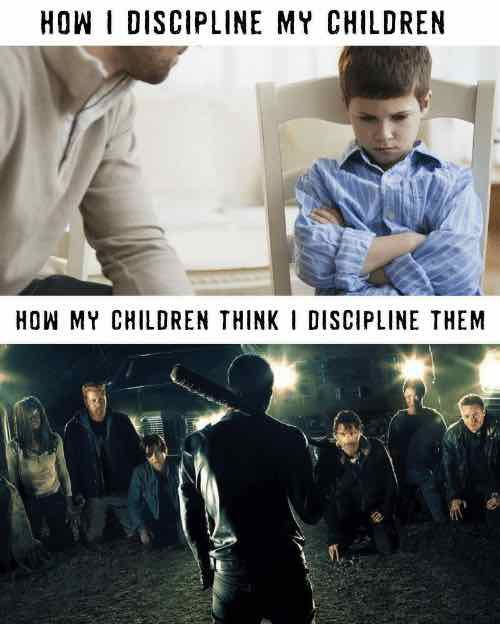
When kids behave, things are easy. The problem is when you need to discipline them. Most parents know which methods they don't want to use to correct their children, but aren't as sure which methods they should use.

So what is discipline? The word comes from the Latin "disciplina" -- which means "to teach." And, in the end, that's what we need more of. Every time a kid misbehaves it's an opportunity to teach them valuable skills like empathy, self-control, problem-solving, and dealing with emotions.

Merely punishing kids might stop bad behavior in the short-term but without a lesson, all it teaches them is that whomever has more power gets to enforce their arbitrary rules. (Hint: this does not bode well for their future relationships.)

Yes, you want them to stop painting the toilet purple but you also want them to learn to consider the feelings of others, and build other long-term skills that will help them lead successful, happy lives. And you want them to feel closer to you after a dispute, not further away.

From No-Drama Discipline:

The research is really clear on this point. Kids who achieve the best outcomes in life—emotionally, relationally, and even educationally—have parents who raise them with a high degree of connection and nurturing, while also communicating and maintaining clear limits and high expectations. Their parents remain consistent while still interacting with them in a way that communicates love, respect, and compassion. As a result, the kids are happier, do better in school, get into less trouble, and enjoy more meaningful relationships.

So how the heck do you do all this? (No, a taser is not involved.)

You want to "connect and redirect." This is the system recommended by Daniel Siegel, clinical professor of psychiatry at the UCLA School of Medicine, and Tara Payne Bryson, a pediatric and adolescent psychotherapist.


Okay, let's get to it...


1) Connect


If your kid is in mid-yell or mid-cry, they cannot hear what you are saying. Reread that. Get it tattooed on your body. How logical are you when you're overwhelmed by emotion? And you expect a kid to be any different?

So immediately doling out punishments will rarely be processed and just escalate an already bad situation. You need to connect.

Connection means showing that you’re on their side – while still maintaining boundaries. You need to tune into their feelings and show them that you understand. This helps move them from reactivity to receptivity. It allows the emotion to dissipate so they can start using their thinky brain instead of their emotional brain. Connection has 4 parts:

Communicate Comfort 

They cry, you yell and things get worse, not better. Sound familiar? Because it's now a fight for power instead of a conversation. As NYPD hostage negotiators know, "behavior is contagious." If you want to be in a fight, by all means, give an angry look, raise your voice and wag your index finger. If you want this to be a somewhat sane interaction, act like it is one. Communicate comfort. Make them feel safe.

Validate 

How do you react when someone dismisses your feelings and tells you "stop making a big deal out of this and just calm down"? Exactly. So don't expect a child to be any better at it. Validate their feelings -- though not all their actions. They need to feel understood in order to calm down. Until the big emotions are out of their way, logic is powerless.

Listen 

Your child is really angry about something. You know what always works? A really long lecture. Going on a rant to someone screaming at the top of their lungs is incredibly effective in showing them the error of their ways and getting them to calm down. No child would everrespond by tuning you out. And make sure to repeat the same points over and over. People love this, especially surly teenagers...

Um, no. They won't process a thing until they get to talk about how they feel and you show them you understand. So listen.

Reflect 

When they tell you how they feel, repeat it back to them. You want to show, not tell. If you say, "I know how you feel" they'll reply, "No, you don't!" If you say, "It really upset you that I wouldn't let you build a nuclear reactor in the basement" they'll say, "Exactly."

After you communicate comfort, validate feelings, listen and reflect, ask yourself one question: “Are they ready to hear, learn, and understand?” If not, repeat the steps.

Whoops, actually there's a second question to ask yourself: "Am Iready?" Because if you're overly emotional this will not go well. They need to be calm -- but so do you.


Okay, so you've connected. Now it's time to "redirect." That's an acronym because 8 more steps is a lot to remember, especially after junior decides to give the living room wall an unapproved mural. So let's start with "R"...


2) Reduce Words


Again, listening beats lecturing. If you regularly bemoan your child's short attention span than you should know better than to launch into an hour-long keynote on proper behavior. If it is a big issue, ask questions and guide a conversation, but don't lecture.

From No-Drama Discipline:

We strongly suggest that when you redirect, you resist the urge to overtalk. Of course it’s important to address the issue and teach the lesson. But in doing so, keep it succinct. Regardless of the age of your children, long lectures aren’t likely to make them want to listen to you more. Instead, you’ll just be flooding them with more information and sensory input. As a result, they’ll often simply tune you out.

(To learn how to raise emotionally intelligent kids, click here.)

Alright, you're being brief and getting to the point. What's next?


3) Embrace Emotions


All feelings are permitted; all behavior is not. Do not insist that their emotions be rational or make sense. (If the world was always rational and made sense, you wouldn't be having this fight and I'd be married to Olivia Wilde.)

From No-Drama Discipline:

...it’s what we do as a result of our emotions that determines whether our behavior is OK or not OK. So our message to our children should be, “You can feel whatever you feel, but you can’t always do whatever you want to do.”

(To learn how to make sure your kids have grit, click here.)

You're being brief and accepting their feelings. Cool. Now how do you actually correct a child?


4) Describe, Don’t Preach


Parents always wonder why their kids tune them out. The answer is simple: because they know what you're going to say and then you say it anyway. 

Chances are, they know what they did was wrong. So instead of lecturing, just call attention to whatever they did: "The couch is on fire." This is less likely to put them on the defensive or lead them to tune you out.

From No-Drama Discipline:

The natural tendency for many parents is to criticize and preach when our kids do something we don’t like. In most disciplinary situations, though, those responses simply aren’t necessary. Instead, we can simply describe what we’re seeing, and our kids will get what we’re saying just as clearly as they do when we yell and disparage and nitpick. And they’ll receive that message with much less defensiveness and drama.

(To learn the science of being a better parent, click here.)

You gave a description instead of a TED talk. Awesome. But the only way you're really going to get them to learn anything is if they're engaged...


5) Involve Your Child In The Discipline


This needs to be a dialogue, not summary judgment. Ask questions. Get them to suggest how the situation should be handled and you'll organically shift into talking about right and wrong, and how other people are impacted by your child's behavior. This is how they learn empathy and problem-solving.

From No-Drama Discipline:

Once you’ve connected and your child is ready and receptive, you can simply initiate a dialogue that leads first toward insight (“I know you know the rule, so I’m wondering what was going on for you that led you to this”) and then toward empathy and integrative repair (“What do you think that was like for her, and how could you make things right?”).

(To learn how to deal with out of control kids -- from hostage negotiators -- click here.)

Now it's a conversation and they're learning something other than why you're a meanie. So how do you tell children "no" without a screaming match -- and teach them self-control at the same time?


6) Reframe A "No" Into A Conditional "Yes"


"Yes, you can watch more TV -- after dinner." It's not a magic spell but it'll often meet with less resistance than a flat "No more TV."

Obviously, some things are non-negotiable: "No, you cannot perform an appendectomy on the family dog." But often you can phrase things with this formula and help them learn about boundaries and self-control with a lot less drama.

From No-Drama Discipline:

An out-and-out no can be much harder to accept than a yes with conditions. No, especially if said in a harsh and dismissive tone, can automatically activate a reactive state in a child (or anyone). In the brain, reactivity can involve the impulse to fight, flee, freeze, or, in extreme cases, faint. In contrast, a supportive yes statement, even when not permitting a behavior, turns on the social engagement circuitry, making the brain receptive to what’s happening, making learning more likely, and promoting connections with others.

(To learn 4 vital parenting tips, click here.)

Now you know how to say no. So how else can we discipline children -- without making them hate us in the process?


7) Emphasize The Positive


Say what you want, not what you don't want. “I need you to brush your teeth and find your backpack,” beats, “Stop messing around and get ready, you’re going to be late for school!”

And make sure to praise them when they do things you like. If every time you open your mouth only criticism comes out, what feelings do you think they're instinctively going to associate with you? Yup.

(To learn the 10 steps to making your kids smarter, click here.)

So what's a good way to sidestep drama altogether -- and have a laugh in the process?


8) Creatively Approach The Situation


Be playful. If there's toy on the floor where it shouldn't be, try a dramatic pratfall instead of a stern glare. Instead of arguing about getting into the car, become a scary monster and chase them into it. With some creativity you can get your point across in a way that reduces defensiveness.

From No-Drama Discipline:

When we exercise response flexibility, we use our prefrontal cortex, which is central to our upstairs brain and the skills of executive functions. Engaging this part of our brain during a disciplinary moment makes it far more likely that we’ll also be able to conjure up empathy, attuned communication, and even the ability to calm our own reactivity.

(To learn the 10 steps to raising happy kids, click here.)

So we know a lot of ways to defuse conflict -- but how do we teach them some valuable life skills and reduce the intensity of the next meltdown?


9) Teach Mindsight Tools


Siegel and Bryson basically mean teaching your kids mindfulness. You want to focus on making sure they learn to not just merely experiencetheir emotions, but also observe their emotions.

Teaching your child to ask, "What is my brain doing right now?" allows them to step back from the chaos going on in their head and study it, versus being consumed by it. You don't want a child that is overwhelmed by feelings or denies their feelings. You want your kid to notice their feelings -- and do something about them.

This teaches them they don't have to be stuck in a negative mood. They don't have to be a victim to external events or their whirlwind emotions. With practice they can cope with feelings and take charge of their behavior.

From No-Drama Discipline:

Brain studies reveal that we actually have two different circuits—an experiencing circuit and an observing circuit. They are different, but each is important, and integrating them means building both and then linking them. We want our kids to not only feel their feelings and sense their sensations, but also to be able to notice how their body feels, to be able to witness their own emotions.

(To learn the 20 simple secrets of happy families, click here.)

Okay, we've learned a lot. Let's round it all up and discover what to do when you screw the above up...


Sum Up


Here's how neuroscience can help you be an amazing parent:
  • Connect: Communicate comfort, validate feelings, listen and reflect.
  • Reduce Words: Seriously, when have lectures ever worked?
  • Embrace Emotions: All feelings are permitted; all behaviors are not.
  • Describe, Don't Preach: "All daddy's shoes are in the refrigerator."
  • Involve Your Child In The Discipline: "What's a way to express your anger that doesn't involve anyone getting 27 stitches?"
  • Reframe A "No" Into A Conditional "Yes": "Yes, you can watch 'Toy Story' for the 400th time -- after mommy finishes this wonderful blog post she's reading."
  • Emphasize The Positive: Instead of “No whining,” try, “I like it when you talk in your normal voice. Can you say that again?”
  • Creatively Approach The Situation: "I'll bet I can eat my vegetables faster than you can."
  • Teach Mindsight Tools: Teach them to notice their emotions. You can't improve how you deal with something if you're not aware of it.
You're not always going to be perfect. (I really hope this did not come as a surprise.) But even your mistakes as a parent can be valuable if you handle them right.

From No-Drama Discipline:

Then they get to see you model how to apologize and make things right. They experience that when there is conflict and argument, there can be repair, and things become good again. This helps them feel safe and not so afraid in future relationships; they learn to trust, and even expect, that calm and connection will follow conflict. Plus, they learn that their actions affect other people’s emotions and behavior. Finally, they see that you’re not perfect, so they won’t expect themselves to be, either.


So it all comes down to "connect and redirect." And when you screw up, don't worry. Apologize, make a joke, try again.

You want your kids to know that everyone makes mistakes and that anger doesn't last forever.

Children need to know that arguments happen -- but that doesn't mean people stop loving you.