Read this article for an interesting insight on how to avoid impaired cognitive ability for a child.
Also, i will write soon about some very useful nootropics (brain enhancers or brain boosters) that can be used without any notable secondary side effects.
See you soon.

On this blog i will explore genius and geniality concepts, talented child and adults, polymaths, multipotentialite, multipods and other similar denominations. Mostly, i would like to learn about the potential hidden within each of us.
Showing posts with label prodigy. Show all posts
Showing posts with label prodigy. Show all posts
Tuesday, 27 November 2018

Sunday, 9 September 2018
How to raise emotionally intelligent children
Another interesting article from Eric Barker, read it and learn from it! |
This Is How To Raise Emotionally Intelligent Kids: 5 Secrets From Research***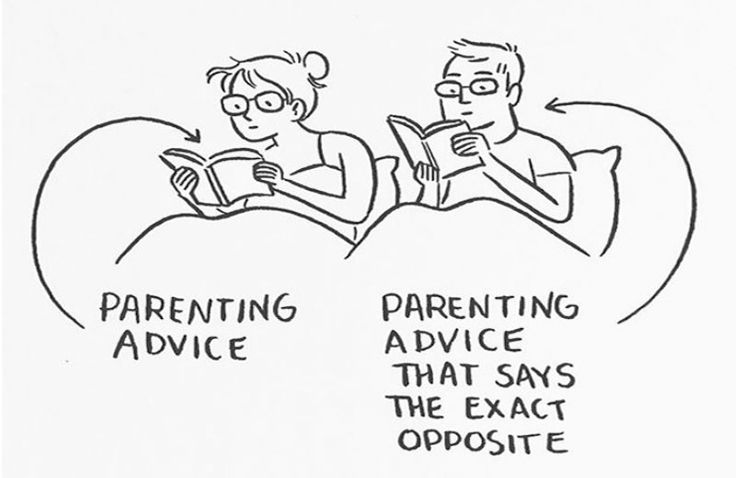 Dealing with kids ain’t easy. They need an exhausting amount of attention and help. From Raising An Emotionally Intelligent Child: Behavioral psychologists have observed that preschoolers typically demand that their caretakers deal with some kind of need or desire at an average rate of three times a minute. Most advice on parenting focuses on how to deal with misbehavior. While helpful, this is also akin to only offering advice on how to survive after a nuclear holocaust and not talking about how to prevent one. What's the secret to making sure your living room doesn't resemble a scene from "Mad Max: Fury Road"? What usually underlies bad behavior is how the child handles negative emotions. And this is something we rarely teach deliberately and almost never teach well. Showing kids how to recognize and deal with feelings prevents misbehavior -- and it's a skill that will serve them their entire lives. It prevents tantrums at age 4 but it's also the difference between saving college money and saving bail money later on. Look at it as potty training for feelings. But how do we do that? Professor John Gottman is the guy who revolutionized the study of relationships, getting it to the point where he could listen to a couple for just a few minutes and determine with a frightening amount of accuracy whether or not they'd divorce. Well, luckily, Gottman also analyzed parenting. And this wasn't the latest parenting theory-of-the-week that somebody came up with over lunch -- this was a truly epic study of mind-bending proportions. He took over 100 married couples with kids ages 4 or 5 and gave them questionnaires. Then conducted thousands of hours of interviews. He observed their behavior in his lab. Taped sessions of the kids playing with their best friends. Monitored heart rates, respiration, blood flow and sweating. Took urine samples -- yeah, urine samples -- from the kids to measure stress-related hormones. And then followed up with the children and families all the way through adolescence, conducting more interviews, evaluating academic performance and... Okay, enough. You get it. The plans of Hollywood Bond Villains aren't this thorough. And when it came to dealing with emotions, Gottman realized there are 4 types of parents. And three ain't so hot:
And then there were the Ultra-Parents. These mothers and fathers unknowingly used what Gottman calls "emotion-coaching." And this produced emotionally intelligent kids. These parents accepted their children's feelings (but not all of the children's behavior), guided the kids through emotional moments, and helped them problem-solve their way to a solution that didn't involve putting the neighbor's kid in the emergency room. How did these tykes end up? From Raising An Emotionally Intelligent Child: The children were better at soothing themselves when they were upset. They could calm down their hearts faster. Because of the superior performance in that part of their physiology that is involved in calming themselves, they had fewer infectious illnesses. They were better at focusing attention. They related better to other people, even in the tough social situations they encountered in middle childhood like getting teased, where being overly emotional is a liability, not an asset. They were better at understanding people. They had better friendships with other children. They were also better at situations in school that required academic performance. In short, they had developed a kind of “IQ” that is about people and the world of feelings, or emotional intelligence. And it all came down to how the parents handled the child's negative emotional outbursts. These parents did five things that the other types rarely did. Alrighty, let's get to it... 1) Be Aware Of EmotionsParenting is stressful and can feel non-stop. Often it's not like running a marathon -- it's like running until you die. So there's a natural tendency to look around when things are (finally) calm and think, "Nothing is currently on fire. Okay, life is good." But this can be like standing in a coal mine ignoring the thousands of dead canaries. Usually emotions precede outbursts. So noticing the child's emotions early -- and not just the resulting bad behavior -- is critical. "Not misbehaving" doesn't mean "not upset." When a passive-aggressive spouse crosses their arms, scowls and says, "I'm fine," at least you know they're definitely not fine. Kids may not even understand what they're feeling or how to best express it. So being aware and noticing early can prevent Tonka trucks from taking flight without FAA approval. But the problem many parents have here is noticing their own emotions. If you're not aware of your feelings and moods you'll have trouble noticing and relating to those of others. From Raising An Emotionally Intelligent Child: Our studies show that for parents to feel what their children are feeling, they must be aware of emotions, first in themselves and then in their kids... Emotional awareness simply means that you recognize when you are feeling an emotion, you can identify your feelings, and you are sensitive to the presence of emotions in other people. Don't be afraid to show emotions in front of your kids. Gottman found that even anger (as long as it's expressed respectfully and constructively) has its place. If parents hold back from showing feelings then kids can learn "Mom and dad don't have these emotions and neither should I." Seeing arguments and then seeing them resolved amicably is far better than never seeing them at all. Kids need a role model not just for values, but also for feelings. From Raising An Emotionally Intelligent Child: Such moms and dads may try to compensate for their fear of losing control by being “super-parents,” hiding their emotions from their children… The irony is that by hiding their emotions, these parents may be raising youngsters who are even less capable of handling negative emotions than they would have been if their parents had learned to let their feelings show in a nonabusive way. That’s because the kids grow up emotionally distant from their parents. Also, the children have one less role model to teach them how to handle difficult emotions effectively. Shielding kids from emotional situations and then sending them out into the world is like sending an athlete to the Olympics with no training. Kids need those moments in order to learn how to regulate their feelings. (To learn more about the science of a successful life, check out my bestselling book here.) Notice feelings now and avoid a crisis later. But what perspective did the smart parents take when outbursts did occur? 2) Emotion Is An Opportunity For Intimacy And TeachingIt's understandable to see a tantrum as an irrational inconvenience that should be eliminated ASAP. But the parents whose children thrived saw outbursts as teaching moments and a time to bond with their kid. Yeah, that doesn't always feel natural when a child is angrily throwing things. Does saying anything resembling, "You should not feel this way" ever work with emotional adults? Exactly. Then it sure as hell isn't going to work with your kid. Saying “There’s nothing to be afraid of,” or “Oh, it’ll be fine” is dismissive. This is how kids learn to doubt their own judgment and lose confidence. The Emotion-Coaching parents realized that a tantrum was the best time to connect with their child and teach them a valuable skill. Yes, you need to stop misbehavior immediately. But you want to do it in a way specific to the child's actions and not make it about their identity. So you want to say, “We don’t paint Grandma's couch purple,” instead of, “Stop being a nightmare!” The children who consistently heard the latter did not fare as well in Gottman's follow ups. From Raising An Emotionally Intelligent Child: When we checked in with these same families three years later, we found that the children who experienced such disrespectful, contemptuous behavior from their parents were the same kids who were having more trouble with schoolwork and getting along with friends. These were the kids who had higher levels of stress-related hormones in their bodies. Their teachers reported they were having more behavior problems, and their moms reported they had more illnesses. It takes practice but you want to see kids' emotional pain like you'd see their physical pain. It's not their fault. It's a challenge they're facing. And one you can help them with. (To learn the two-word morning ritual that will make you happy all day, click here.) Okay, so you've got the right perspective. You're an emotional mentor, not a corrections officer. But what do you actually do to help? 3) Listen Empathetically And Validate FeelingsDon't argue the facts. Feelings aren't logical. You wouldn't expect the new employee to know how to find the bathroom and you shouldn't expect a child to know how to handle emotions that, frankly, you still have problems dealing with after decades of experience. Don't immediately try to fix things. You need to establish you're a safe ally before you can solve anything. Understanding must precede advice, and, just as with adults, they decide when you understand. The critical distinction Gottman realized is that it's important to accept all feelings -- but not all behavior. If you skip immediately to problem-solving, the kid never learns the skill of how to deal with those uncomfortable emotions. You want to use "empathetic listening." Get them to talk. Help them clarify. Validate their feelings (but, again, not necessarily their behavior). They need to feel you really understand and are on their side. Take a deep breath, relax and focus on them. They'll notice if you're impatient or frustrated and just going through the motions. From Raising An Emotionally Intelligent Child: In this context, listening means far more than collecting data with your ears. Empathetic listeners use their eyes to watch for physical evidence of their children’s emotions. They use their imaginations to see the situation from the child’s perspective. They use their words to reflect back, in a soothing, noncritical way, what they are hearing and to help their children label their emotions. Relate their child problems to adult problems in your head to help you empathize. "But why is she freaking out about her new baby brother?! It makes no sense!" Really? How would you like it if your spouse brought home a new lover and expected you to welcome them into the home? Get out of your head and into theirs. Relate. Empathize. Probing questions may be too much for a little kid. It can feel like interrogation. They may not even know why they're sad. Try sharing simple observations. Say, "I noticed that you frowned when I mentioned going to the party" and then wait for a response. (To learn the 4 rituals neuroscience says will make you an awesome parent, click here.) Alright, they're opening up. How do you calm them down and teach them how to cope? 4) Help Them Label Their EmotionsA young child is not going to be able to say, "Dearest mother, I apologize for my unnecessary irritability. My transition to the new kindergarten class has caused me an unexpected amount of stress. My future academic adjustments will be conducted with a level of grace heretofore unseen in our lovely household." You've got the words; they don't. Help them get a handle on what's going on by labeling what they feel. From Raising An Emotionally Intelligent Child: Providing words in this way can help children transform an amorphous, scary, uncomfortable feeling into something definable, something that has boundaries and is a normal part of everyday life. Anger, sadness, and fear become experiences everybody has and everybody can handle. Labeling emotions goes hand in hand with empathy. A parent sees his child in tears and says, “You feel very sad, don’t you?” Now, not only is the child understood, he has a word to describe this intense feeling. Studies indicate that the act of labeling emotions can have a soothing effect on the nervous system, helping children to recover more quickly from upsetting incidents. Don't gloss over this. Labeling is absurdly powerful. Neuroscience has repeatedly demonstrated its ability to soothe emotions. It's one of the main techniques hostage negotiatorsuse to keep the most dangerous situations calm. So when a child is crying because their sister got a better gift than they did, you don't want to be dismissive and say, "I'm sure you'll get a better present next time." You want to validate and label the feeling with something like, "You wish you'd gotten something more fun. I bet that makes you feel kind of jealous." Now the kid is thinking, "They understand me." And they've learned something about how to cope by talking it out and labeling the emotions to get a handle on them. And Gottman found this leads to really good things. From Raising An Emotionally Intelligent Child: As we have discussed earlier, the implications of teaching a child to self-soothe are enormous. Kids who can calm themselves from an early age show several signs of emotional intelligence: They are more likely to concentrate better, have better peer relationships, higher academic achievement, and good health. My advice to parents, then, is to help your kids find words to describe what they are feeling. This doesn’t mean telling kids how they ought to feel. It simply means helping them develop a vocabulary with which to express their emotions. (To learn how to make sure your kids are resilient, click here.) They're more calm. The storm has passed. They're learning about emotions. But how do you teach them better behavior and how to fix the actual problem? 5) Set Limits And Help Them Problem-SolveAgain, all feelings are acceptable -- but all behavior isn't. You need to set limits. The parent-child relationship is not a democracy. Once the emotions are dealt with, you can be firm. From Raising An Emotionally Intelligent Child: After the parent acknowledges the emotion behind the misbehavior and helps him to label it, the parent can make sure the child understands that certain behaviors are inappropriate and can’t be tolerated. Then the parent can guide the child into thinking of more appropriate ways to handle negative feelings. “You’re mad that Danny took that game away from you,” the parent might say. “I would be, too. But it’s not okay for you to hit him. What can you do instead?” After you've listened empathetically, labeled feelings, and set limits on any bad behavior, it's time to fix things. Someone needs to lead the problem solving. And that person is not you. This is another skill you want to help them develop. You won't always be there to tell them what to do. So encourage them to come up with ideas, guide them to a solution in line with your values that is effective and takes other people's feelings into consideration. This is how emotionally intelligent kids become resourceful, responsible children. (To learn how to be a better parent, from Wharton professor Adam Grant, click here.) Okay, we've learned a lot. Let's round it up and address the question every realistic parent has been thinking from the start: How the heck am I supposed to do all of this stuff when I'm stressed to the gills, we're in the middle of the mall, and already 15 minutes late for a doctor's appointment? Yes, there is an answer... Sum UpThis is how to raise emotionally intelligent kids:
Don't worry. Gottman says you don't have to do it when the problem occurs. That would be preferable, but as long as you set aside time to sit down and have the conversation, you can help your kid become more emotionally intelligent. From Raising An Emotionally Intelligent Child: In an ideal world, we’d always have time to sit and talk with our kids as feelings come up. But for most parents, that’s not always an option. It’s important, therefore, to designate a time—preferably at the same period each day—when you can talk to your child without time pressures or interruptions. Emotion-coaching is not a panacea. It doesn't have Harry Potter magic powers to turn your little devil into a little angel. There will still be outbursts. You'll still need discipline and limits. But with time it'll build a tighter bond with your child and help them develop a skill that will benefit them the rest of their life. What most parents want more than anything is for their kids to be happy. What's happiness? An emotion. So you'll teach them to go potty. And school will teach them how to think. But more than anything, don't forget to teach them how to feel. |
Wednesday, 26 July 2017
Are real geniuses born or created?
One interesting article in The Guardian stating that there is no such thing as prodigy child, and the intelligence is not as much inherited, as properly trained to use it more efficiently. I wanted to say this, that the IQ is not as relevant as the ability to use practically your skills.
My theory in few words -real intelligence - RI is IQ x practical use.
Case 1
IQ = 180
Practical use = 50%
Real intelligence = 180 x 50% = 90
Case 2
IQ = 110
Practical use = 90%
Real intelligence = 110 x 90% = 99
So, polishing your skills, even if you have not superhuman IQ, can make you better at something than a lazy genius.
Hard work trumps untrained genius every time.
Link for article here.
My theory in few words -real intelligence - RI is IQ x practical use.
Case 1
IQ = 180
Practical use = 50%
Real intelligence = 180 x 50% = 90
Case 2
IQ = 110
Practical use = 90%
Real intelligence = 110 x 90% = 99
So, polishing your skills, even if you have not superhuman IQ, can make you better at something than a lazy genius.
Hard work trumps untrained genius every time.
Link for article here.
Saturday, 3 September 2016
Super Humans - Akiane
Akiane Kramarik (/əˈkiːənə/; born on July 9, 1994), referred to mononymously as Akiane, is an American poet and artist. She was known as a child prodigy for making a concrete image of Jesus and had begun drawing at the age of four. Kramarik's best-known painting is Prince of Peace, which was completed at the age of eight. Akiane Kramarik was born on July 9, 1994, in Mount Morris, Illinois to a Lithuanian mother and an American father. Her education began at a public school but she was later homeschooled. She is a self-taught painter. She states that God spoke to her when she was four years old, encouraging her to draw and paint her visions. Her parents were atheists at the time (they later converted to Christianity because of Kramarik's paintings and visions). She began to draw at the age of four, advanced to painting at six, and began to write poetry at seven. Her first completed self-portrait sold for US$10,000. Kramarik donates a portion of the revenue from art sales to charities. Her paintings are often allegorical as well as spiritual, involving likenesses of Jesus, children, and animals, as well as self-portraits. She often draws inspiration from magazine pictures. However, according to Kramarik, her main inspiration comes from her visions of heaven and her personal connection with God. At the age of 10, she appeared on The Oprah Winfrey Show; at the age of 12, on CNN. Additional appearances include The Late Late Show with Craig Ferguson (Episode: 1x68, April 25, 2005) and The Katie Couric Show (Episode: 1x21, October 8, 2012). By age 12, she had completed sixty large paintings. Some of her works have been purchased by the US Embassy in Singapore. Overall, she has completed over 200 artworks and 800 literary works and has published two best-selling books. In the spring of 2003, Akiane painted her first portrait of Jesus, entitled Prince of Peace. John Roth, a carpenter from Sandpoint, Idaho, was asked by Akiane to model for the painting representing Jesus. Colton Burpo, a near-death survivor at age four, had been identifying deceased family members from photographs, and the family had been searching for images that matched the boy's description of Jesus. It was not until Kramarik's Prince of Peace, a portrait of Jesus, was shown many years later on Glenn Beck's The Blaze, that Burpo confirmed that "they finally got one right." Burpo's story is told in the New York Times number-one, best-selling book, Heaven Is for Real (2010) and the identically titled film (2014). Kramarik is referenced in the film as the "young Lithuanian girl" and is shown with her painting at the beginning and the end of the movie.
Friday, 2 September 2016
Super Humans - Bada Shanren
Bada Shanren (born Zhu Da ca. 1626—1705) was a Han Chinese painter of ink wash painting and a calligrapher. He was of noble lineage, being a descendant of the Ming dynasty prince Zhu Quan. Art historians have named him as a leading painter of the period. Bada Shanren, a purported child prodigy, began painting and writing poetry in his early childhood. About the year 1644, when the Ming emperor committed suicide and the Manchu army from the north attacked Beijing, the young Han Chinese man sought refuge in a vihara. Because he was a Ming prince, the dynastic upheaval created a great amount of uncertainty for his position in society. As years passed and the Qing dynasty became more firmly established, there was less and less insecurity among the Qing regime about remaining Ming loyalties and possible future rebellions. Due to these more stable circumstances, after 40 years, Bada Shanren deemed it acceptable to leave the monastery and to re-enter day-to-day life among society. In the aftermath of a nervous breakdown that could have been staged to avoid retribution for his family background, Zhu Da abandoned his monastic life and developed a career as a professional painter, adopting a series of descriptive pseudonyms, most notably Bada Shanren by which he is most often known today. Bada Shanren is believed to have a mental illness. He is said to have screamed and made weird sounds while painting. The stylized vertical writing of his pseudonym Bada Shanren (八大山人) looks like the characters for laugh (笑) and cry (哭), thus by signing his paintings he implied his confusion and feelings of grief for the fate of his country and home.
His paintings feature sharp brush strokes which are attributed to the sideways manner by which he held his brush. In the 1930s, Chinese painter Zhang Daqian produced several forgeries of Bada Shanren's works but they are easily spotted by the trained eye, because the modern copies were softer and rounder. Yale University scholar Fred Fangyu Wang was a major collector of Bada Shanren paintings from the 1960s until his death in 1997.
Thursday, 1 September 2016
Super Humans - Edmund Thomas Clint
Edmund Thomas Clint (1976–1983) was an Indian child prodigy known for having drawn over 30,000 paintings during his short life of seven years. Clint was the lone son of M.T. Joseph and Chinnamma Joseph. He was named after actor and director Clint Eastwood. He loved painting Hindu festivals and traditional events near his home in Kochi, Kerala. When he died of kidney failure in 1983, he was just six years and 11 months old, yet left behind some 20,000 artworks. Normally it would take years of analytical study and training to draw such paintings. His work has been displayed in exhibitions in Thiruvananthapuram, Kerala in 1995 and 2007. At the age of 5, he secured first place in a competition held for painters below the age 18.
Wednesday, 31 August 2016
Super Humans - Aelita Andre
Aelita Andre (born 9 January 2007) is an Australian abstract artist known for her Surrealist painting style and her young age. She began to paint when aged nine months, and her work was displayed publicly in a group exhibition shortly after she turned two. Her first solo exhibition opened in New York City in June 2011, when she was four years old. Andre was born to Australian father Michael Andre and Russian mother Nikka Kalashnikova. As a baby, she often watched her parents, both artists themselves, work on canvases on the floor. She learned to paint before she could walk, several months prior to her first birthday. She and her family currently reside in Melbourne.
Andre's mother, believing her daughter to be a child prodigy, showed some of Andre's paintings to a Melbourne-based art curator when the girl was 22 months old. Impressed with the work, the curator agreed to include it in a group exhibition in the Brunswick Street Gallery, and he began advertising the show with Andre's paintings before he learned of her age. Although he was surprised, he kept his promise to display the work. The show opened shortly after her second birthday and also featured Kalashnikova's photography. Several months later, Andre and her parents visited Hong Kong, where she sold her most expensive painting to date for $24,000. Andre's first solo exhibition, The Prodigy of Color, ran from 4 to 25 June 2011 at the Agora Gallery, a gallery in Chelsea. It contained 24 of her paintings, each on sale for between $4,400 and $10,000. The press nicknamed her "the Pee-wee Picasso" after nine of the works sold for a total of more than $30,000. According to the BBC, these sales may make the four-year-old "the youngest ever professional artist". Andre's second solo exhibition, Secret Universe, ran from 12 June to 3 July 2012 at the Agora Gallery.
Art critics have noted Andre's work, classified as abstract expressionism, for its employment of the Surrealist techniques automatism and accidentalism. She paints with acrylics and often adds three-dimensional objects, including bark, twigs, and feathers, to the canvases. Buyers of her art at her New York show commented favourably on the paintings' simplicity and richness in texture. A number of major news sources, including Time, the BBC, The Washington Post, the The Sydney Morning Herald, ABC News, and the New York Post, have generally responded favourably to Andre's work and to her early success. Several of them have compared her to Jackson Pollock, Salvador Dalí, and Pablo Picasso. At least one other, The New York Times, acknowledged her widespread notoriety but commented that her paintings "are hardly novel from a formal vantage, nor do they provide added meaning below the surface." It also noted that although her 2009 exhibition in Melbourne was not at a vanity gallery, the Agora Gallery's pay-for-show operation generated controversy about the legitimacy of her international fame. Nevertheless, the interest that collectors and the media showed in her exhibition at Agora resulted in every painting in the show being sold within two weeks, indicating that the show contributed to the growth of her international reputation.
Tuesday, 30 August 2016
Super Humans - Angelica Kauffman
Maria Anna Angelika Kauffmann RA (30 October 1741 – 5 November 1807), usually known in English as Angelica Kauffman, was an Austrian Neoclassical painter who had a successful career in London and Rome. Remembered primarily as an history painter, Kauffmann was a skilled portraitist, landscape and decoration painter. A contemporary of Sir Joshua Reynolds and Thomas Gainsborough, she was one of the two female founding members of the Royal Academy in London in 1768. Kauffman was born at Chur in Graubünden, Switzerland, where her father was working for the local bishop but grew up in Schwarzenberg in Vorarlberg/Austria where her family originated. Her father, Joseph Johann Kauffmann, was a relatively poor man but a skilled painter, who was often traveling for his work. It was he who taught his precocious daughter. Angelica, a child prodigy, rapidly acquired several languages from her mother, Cleophea Lutz, read incessantly and showed talent as a musician, but her greatest progress was in painting, and by her twelfth year she had become known as a painter, with bishops and nobles being her sitters. In 1754 her father took her to Milan. Later visits to Italy of long duration followed. She became a member of the Accademia di Belle Arti di Firenze in 1762. In 1763 she visited Rome, returning again in 1764. From Rome she passed to Bologna and Venice, everywhere feted for her talents and charm. Writing from Rome in August 1764 to his friend Franke, Winckelmann refers to her popularity; she was then painting his picture, a half-length; of which she also made an etching. She spoke Italian as well as German, he says, and expressed herself with facility in French and English - one result of the last-named accomplishment being that she became a popular portraitist for British visitors to Rome. "She may be styled beautiful," he adds, "and in singing may vie with our best virtuosi."
Saturday, 20 August 2016
Super Humans - Albrecht Dürer
Albrecht Dürer (/ˈdʊərər, ˈdjʊərər/; German: [ˈalbʁɛçt ˈdyːʁɐ]; 21 May 1471 – 6 April 1528) was a painter, printmaker and theorist of the German Renaissance. Born in Nuremberg, Dürer established his reputation and influence across Europe when he was still in his twenties, due to his high-quality woodcut prints. He was in communication with the major Italian artists of his time, including Raphael, Giovanni Bellini and Leonardo da Vinci, and from 1512 he was patronized by emperor Maximilian I. His vast body of work includes engravings, his preferred technique in his later prints, altarpieces, portraits and self-portraits, watercolours and books. The woodcuts, such as the Apocalypse series (1498), retain a more Gothic flavour than the rest of his work. His well-known engravings include the Knight, Death, and the Devil (1513), Saint Jerome in his Study (1514) and Melencolia I (1514), which has been the subject of extensive analysis and interpretation. His watercolours also mark him as one of the first European landscape artists, while his ambitious woodcuts revolutionized the potential of that medium. Dürer's introduction of classical motifs into Northern art, through his knowledge of Italian artists and German humanists, has secured his reputation as one of the most important figures of the Northern Renaissance. This is reinforced by his theoretical treatises, which involve principles of mathematics, perspective and ideal proportions.
Dürer was born on 21 May 1471, third child and second son of his parents, who had at least fourteen and possibly as many as eighteen children. His father, Albrecht Dürer the Elder, was a successful goldsmith, originally Ajtósi, who in 1455 had moved to Nuremberg from Ajtós, near Gyula in Hungary. The German name "Dürer" is a translation from the Hungarian, "Ajtósi". Initially, it was "Türer," meaning doormaker, which is "ajtós" in Hungarian (from "ajtó", meaning door). A door is featured in the coat-of-arms the family acquired. Albrecht Dürer the Younger later changed "Türer", his father's diction of the family's surname, to "Dürer", to adapt to the local Nuremberg dialect. Albrecht Dürer the Elder married Barbara Holper, the daughter of his master, when he himself became a master in 1467. Dürer's godfather was Anton Koberger, who left goldsmithing to become a printer and publisher in the year of Dürer's birth and quickly became the most successful publisher in Germany, eventually owning twenty-four printing-presses and having many offices in Germany and abroad. Koberger's most famous publication was the Nuremberg Chronicle, published in 1493 in German and Latin editions. It contained an unprecedented 1,809 woodcut illustrations (albeit with many repeated uses of the same block) by the Wolgemut workshop. Dürer may have worked on some of these, as the work on the project began while he was with Wolgemut. Because Dürer left autobiographical writings and became very famous by his mid-twenties, his life is well documented by several sources. After a few years of school, Dürer started to learn the basics of goldsmithing and drawing from his father. Though his father wanted him to continue his training as a goldsmith, he showed such a precocious talent in drawing that he started as an apprentice to Michael Wolgemut at the age of fifteen in 1486. A self-portrait, a drawing in silverpoint, is dated 1484 (Albertina, Vienna) "when I was a child," as his later inscription says. Wolgemut was the leading artist in Nuremberg at the time, with a large workshop producing a variety of works of art, in particular woodcuts for books. Nuremberg was then an important and prosperous city, a centre for publishing and many luxury trades. It had strong links with Italy, especially Venice, a relatively short distance across the Alps.
Friday, 1 July 2016
Super Humans - Adora Svitak
Adora Svitak (born October 15, 1997 in Springfield, Oregon) is an American writer, public speaker, and activist. Svitak was born in Springfield. Her mother, Joyce, was a Chinese immigrant who grew up during the Cultural Revolution. Her father, John, studied physics and worked as a software engineer.
A voracious reader from age three, Adora Svitak's first serious foray into writing - at age five - was limited only by her handwriting and spelling. (Her astonishing verbal abilities already matched that of young adults over twice her age.) As her official bio says, her breakthrough would soon come "in the form of a used Dell laptop her mother bought her." At age seven, she typed out over 250,000 words -- poetry, short stories, observations about the world - in a single year. Svitak has since fashioned her beyond-her-years wordsmithing into an inspiring campaign for literacy - speaking across the country to both adults and kids. She is author of Flying Fingers, a book on learning.
Her inspired TED Talks "What we can learn from children" has more than 4 millions viewers. And her knowledge and use of a complex vocabulary is somehow astonishing.
Thursday, 30 June 2016
Super Humans - Minou Drouet
Marie-Noëlle Drouet, known as Minou Drouet (born July 24, 1947), of La Guerche-de-Bretagne, France, is a former poet, musician, and actor.
Drouet gained fame in 1955 when some of her poems and letters circulated privately among French writers and publishers, generating controversy over whether or not Drouet's mother Claude was their true author. Drouet soon overcame much of this skepticism by writing poems before witnesses without her mother present. In one such test, she wrote a poem to gain admission to France's Society of Authors, Composers and Music Publishers. Drouet also studied piano and guitar. Throughout the late 1950s and early 1960s, Drouet toured as an author and musician. Jean Cocteau said famously of Drouet, "Tous les enfants ont du génie sauf Minou Drouet" (In English: All children have genius, except for Minou Drouet). After her grandmother became ill around 1966, Drouet worked as a nurse for two years before returning to public life as a singer-songwriter and children's novelist. She wrote one adult novel; its title in English translation was Donatella. Eventually, Drouet returned to her childhood home in La Guerche-de-Bretagne. She now lives with her husband Jean-Paul Le Canu and has left public life except to publish a memoir, Ma vérité, in 1993. New Yorker critic Robert Gottlieb describes Ma vérité as "reticent and skimpy," saying that it focuses on facts rather than subjective interpretations of Drouet's childhood.
Drouet gained fame in 1955 when some of her poems and letters circulated privately among French writers and publishers, generating controversy over whether or not Drouet's mother Claude was their true author. Drouet soon overcame much of this skepticism by writing poems before witnesses without her mother present. In one such test, she wrote a poem to gain admission to France's Society of Authors, Composers and Music Publishers. Drouet also studied piano and guitar. Throughout the late 1950s and early 1960s, Drouet toured as an author and musician. Jean Cocteau said famously of Drouet, "Tous les enfants ont du génie sauf Minou Drouet" (In English: All children have genius, except for Minou Drouet). After her grandmother became ill around 1966, Drouet worked as a nurse for two years before returning to public life as a singer-songwriter and children's novelist. She wrote one adult novel; its title in English translation was Donatella. Eventually, Drouet returned to her childhood home in La Guerche-de-Bretagne. She now lives with her husband Jean-Paul Le Canu and has left public life except to publish a memoir, Ma vérité, in 1993. New Yorker critic Robert Gottlieb describes Ma vérité as "reticent and skimpy," saying that it focuses on facts rather than subjective interpretations of Drouet's childhood.
Wednesday, 29 June 2016
Super Humans - Lope de Vega
Félix Lope de Vega y Carpio (Spanish pronunciation: [ˈfeliks ˈlope ðe ˈβeɣa i ˈkarpjo]; 25 November 1562 – 27 August 1635) was a Spanish playwright, poet and novelist. He was one of the key figures in the Spanish Golden Century of Baroque literature. His reputation in the world of Spanish literature is second only to that of Cervantes, while the sheer volume of his literary output is unequalled, making him one of the most prolific authors in the history of literature.
Nicknamed "The Phoenix of Wits" and "Prodigy of Nature" (in Spanish: Fénix de los Ingenios, Monstruo de la Naturaleza; because of the volume of his work) by Miguel de Cervantes, Lope de Vega renewed the Spanish theatre at a time when it was starting to become a mass cultural phenomenon. He defined its key characteristics, and along with Calderón de la Barca and Tirso de Molina, took Spanish Baroque theatre to its greatest heights. Because of the insight, depth and ease of his plays, he is regarded as one of the greatest dramatists in Western literature, his plays still being produced worldwide. He was also one of the best lyric poets in the Spanish language, and author of several novels. Although not well known in the English-speaking world, his plays were presented in England as late as the 1660s, when diarist Samuel Pepys recorded having attended some adaptations and translations of them, although he omits mentioning the author. Some 3,000 sonnets, 3 novels, 4 novellas, 9 epic poems, and about 500 plays are attributed to him. Although he has been criticised for putting quantity ahead of quality, nevertheless at least 80 of his plays are considered masterpieces. He was a friend of the writers Quevedo and Juan Ruiz de Alarcón, and the volume of his lifework made him envied by not only contemporary authors such as Cervantes and Góngora, but also by many others: for instance, Goethe once wished he had been able to produce such a vast and colourful work.
Félix Lope de Vega y Carpio was born in Madrid to a family of undistinguished origins, recent arrivals in the capital from Valle de Carriedo in Cantabria. His father, Félix de Vega, was an embroiderer. Little is known of his mother, Francisca Fernández Flórez. He later added the distinguished name of Carpio from one of his in-laws. After a brief stay in Valladolid, his father moved to Madrid in 1561, perhaps drawn by the possibilities of the new capital city. However, Lope de Vega would later affirm that his father arrived in Madrid through a love affair from which his future mother was to rescue him. Thus the writer became the fruit of this reconciliation and owed his existence to the same jealousies he would later analyze so much in his dramatic works. The first indications of young Lope's genius became apparent in his earliest years. His friend and biographer Pérez de Montalbán stated that at the age of five he was already reading Spanish and Latin, and by his tenth birthday he was translating Latin verse. He wrote his first play when he was 12, allegedly El verdadero amante, as he would later affirm in his dedication of the work to his son Lope, although this statements are most probably exaggerations. His great talent bore him to the school of poet and musician Vicente Espinel in Madrid, to whom he later always referred with veneration. In his fourteenth year he continued his studies in the Colegio Imperial, a Jesuit school in Madrid, from which he absconded to take part in a military expedition in Portugal. Following that escapade, he had the good fortune of being taken into the protection of the Bishop of Ávila, who recognized the lad's talent and saw him enrolled in the University of Alcalá. Following graduation Lope had planned to follow in his patron's footsteps and join the priesthood, but those plans were dashed by falling in love and realizing that celibacy was not for him. Thus he failed to attain a bachelor's degree and made what living he could as a secretary to aristocrats or by writing plays. In 1583 Lope enlisted in the Spanish Navy and saw action at the Battle of Ponta Delgada in the Azores, under the command of his future friend Álvaro de Bazán, 1st Marquis of Santa Cruz, to whose son he would later dedicate a play. Following this he returned to Madrid and began his career as a playwright in earnest. He also began a love affair with Elena Osorio (the "Filis" of his poems), who was separated from her husband, actor Cristóbal Calderón, and was the daughter of a leading theater director. When, after some five years of this torrid affair, Elena spurned Lope in favor of another suitor, his vitriolic attacks on her and her family landed him in jail for libel and, ultimately, earned him the punishment of eight years' banishment from the court and two years' banishment from Castile.
Tuesday, 28 June 2016
Super Humans - Seth F. Henriett
Henriett Seth F. (Hungarian pseudonym Seth F. Henriett; birth name Fajcsák Henrietta; born 27 October 1980) is a Hungarian autistic savant poet, writer, musician and artist who became world famous with one book titled Autizmussal önmagamba zárva ("Closed into myself with autism") and her one sentence on many cubes from her book made one monodrama, titled Nemsenkilény, monológ nemmindegyembereknek ("Notanobodycreature"), before the age of 30. worldwide and nationally having regard to her childhood autism and heart disorders as mitral valve prolapse, three eye disorders as nearsightedness, astigmatism, strabismus, orthopedic diseases and other physical disorders. She gave up creative music career altogether at the age of 13, creative writing altogether at the age of 25 and she also gave up creative painting altogether before the age of 27. Henriett Seth F.' s life and arts can be compared with Arthur Rimbaud' s life and her arts took after her "Little Wassily Kandinsky" 's. Henriett universal effect of all that was what we now call autism and savant syndrome.
Henriett did not make eye contact in her early childhood. In 1987 all the primary schools in her town refused her admission application because of her communication problems. She was placed in a music and art class, but she never sang songs, so, in 1989 she was sent to a mentally handicapped primary school by two teachers, although she remained in music and art class. She played flute at the age of 8 and played contrabass at the age of 10–12, and until the age of 13 she was in many concerts in the Garrison and Soldiers of Club (in Hungarian: Helyorsegi Klub). She gave up creative music career altogether at the age of 13. She was also found to have echolalia, communications problems and repetitive behaviors, see Henriett as a young girl – on the first digitized videos of childhood autism and savant syndrome on Hungary – on investigations and language development with her photos of paintings by Hungarian Autism Research Group, Budapest, 2002. She was diagnosed with childhood autism by Hungarian Autism Research Group (Autizmus Alapítvány és Kutatócsoport) and two psychiatries of Eger. Henriett had a long history of visual art, poetry and writing in her childhood; beginning at age nine and finishing at age thirteen. Henriett universal effect of all that was what we now call autism and savant syndrome, she painted autistic art paintings to the House of Arts, Eger, and Hotel Stadion of Budapest in the East-European Autism Conference, 2004. She won the Géza Gárdonyi Prize at the age of 18 for her art and literature. Henriett went to Eszterházy Károly College at the age of 18 to the Psychology Institution, but her communication and her behavior problems finished with a diagnosis of childhood autism in 2002. She has Raven IQ above 140 and Magyar Wechsler Intelligence Test (MAWI) IQ above 120 with part some under IQ 90, so she was considered handicapped genius, a perfect example of childhood autism and savant syndrome, see disability support. In 2005, she wrote a book, Autizmussal önmagamba zárva ("Closed into myself with autism"), that was published by the Hungarian Autism Research Group and Ministry for National Cultural Heritage. Henriett was invited to the Friderikusz Sándor's documentary film, to Szólás Szabadsága ("Freedom of Speech"), in 2005, that was seen by 700,000 people. This documentary film was entitled Esőlány ("Rain Girl"). In 2006 Henriett wrote one novel, Autizmus – Egy másik világ ("Autism – Another World"). That work was published by University of Pécs, in the New Galaxy anthology. Henriett won the 6th-place prize in the International Literature Competition in 2000, at the age of 19. She came in first in 2001, at the age of 20 (by International Alliance of Hungarian Writers). Henriett wrote novels and poems during her childhood, as well as in college life to the periodical Esőember ("Rain Man"), 2006. She showed her last art work in Brody Sandor Public Library in June 2007. She gave up creative writing altogether at the age of 25 and she also gave up creative painting altogether before the age of 27. She did not sold work of her childhood and teen age literature and visual art at her mother's advice, but her own room was transformed childhood autism and savant syndrome memorial room at age 30. She also had three autoimmune disorders and now living with childhood autism, heart disorders as mitral valve prolapse, three eye disorders as nearsightedness, astigmatism, strabismus, orthopedic diseases and other physical disorders. Her organism was attacked by cancer in 2009. In 2010, Orlai Produkciós Iroda made a monodrama, Nemsenkilény, monológ nemmindegyembereknek ("Notanobodycreature"), from book of Henriett Seth F. The text book contains details of Donna Williams' s Nobody Nowhere: The extraordinary Autobiography of an Autistic Girl, Don't want to Be Inside Me Anymore: Messages from Autistic Mind. That played in Esztergom, Budapest, Pécs, Tatabánya, Székesfehérvár and Eger theatres and made from it TV documentary in Hungarian Television, 2010, and Budapest, Gyöngyös theatres in 2011. Henriett Seth F.' s life and arts can be compared with Arthur Rimbaud' s life and her arts took after her "Little Wassily Kandinsky" 's.
Wednesday, 25 May 2016
Super Humans - Alexander Pope
Alexander Pope (21 May 1688 – 30 May 1744) was an 18th-century English poet. He is best known for his satirical verse, as well as for his translation of Homer. Famous for his use of the heroic couplet, he is the second-most frequently quoted writer in The Oxford Dictionary of Quotations, after Shakespeare. Alexander Pope was born to Alexander Pope Senior (1646–1717), a linen merchant of Plough Court, Lombard Street, London, and his wife Edith (née Turner) (1643–1733), who were both Catholics. Edith's sister Christiana was the wife of the famous miniature painter Samuel Cooper. Pope's education was affected by the recently enacted Test Acts, which upheld the status of the established Church of England and banned Catholics from teaching, attending a university, voting, or holding public office on pain of perpetual imprisonment. Pope was taught to read by his aunt, and went to Twyford School in about 1698/99. He then went to two Catholic schools in London. Such schools, while illegal, were tolerated in some areas. In 1700, his family moved to a small estate at Popeswood in Binfield, Berkshire, close to the royal Windsor Forest. This was due to strong anti-Catholic sentiment and a statute preventing Catholics from living within 10 miles (16 km) of either London or Westminster. Pope would later describe the countryside around the house in his poem Windsor Forest. Pope's formal education ended at this time, and from then on he mostly educated himself by reading the works of classical writers such as the satirists Horace and Juvenal, the epic poets Homer and Virgil, as well as English authors such as Geoffrey Chaucer, William Shakespeare and John Dryden. He also studied many languages and read works by English, French, Italian, Latin, and Greek poets. After five years of study, Pope came into contact with figures from the London literary society such as William Wycherley, William Congreve, Samuel Garth, William Trumbull, and William Walsh. At Binfield, he also began to make many important friends. One of them, John Caryll (the future dedicatee of The Rape of the Lock), was twenty years older than the poet and had made many acquaintances in the London literary world. He introduced the young Pope to the ageing playwright William Wycherley and to William Walsh, a minor poet, who helped Pope revise his first major work, The Pastorals. He also met the Blount sisters, Teresa and Martha, both of whom would remain lifelong friends. From the age of 12, he suffered numerous health problems, such as Pott's disease (a form of tuberculosis that affects the bone), which deformed his body and stunted his growth, leaving him with a severe hunchback. His tuberculosis infection caused other health problems including respiratory difficulties, high fevers, inflamed eyes, and abdominal pain. He grew to a height of only 1.37 m (4 ft 6 in). Pope was already removed from society because he was Catholic; his poor health only alienated him further. Although he never married, he had many female friends to whom he wrote witty letters. Allegedly, his lifelong friend Martha Blount was his lover.
Tuesday, 24 May 2016
Super Humans - Rimbaud
Jean Nicolas Arthur Rimbaud (/ræmˈboʊ/ or /ˈræmboʊ/; French pronunciation: [aʁtyʁ ʁɛ̃bo] ( listen) ; 20 October 1854 – 10 November 1891) was a French poet born in Charleville-Mézières. He influenced modern literature and arts, and prefigured surrealism. He started writing poems at a very young age, while still in primary school, and stopped completely before he turned 21. He was mostly creative in his teens (17–20). The critic Cecil Arthur Hackett wrote that his "genius, its flowering, explosion and sudden extinction, still astonishes". Rimbaud was known to have been a libertine and for being a restless soul. He traveled extensively on three continents before his death from cancer just after his thirty-seventh birthday.
Arthur Rimbaud was born in the provincial town of Charleville (now part of Charleville-Mézières) in the Ardennes département in northeastern France. He was the second child of Frédéric Rimbaud (7 October 1814 – 16 November 1878) and Marie Catherine Vitalie Cuif (10 March 1825 – 16 November 1907). Rimbaud's father, a Burgundian of Provençal extraction, was an infantry captain risen from the ranks; he had spent much of his army career abroad. From 1844 to 1850, he participated in the conquest of Algeria, and in 1854 was awarded the Légion d'honneur "by Imperial decree". Captain Rimbaud was described as "good-tempered, easy-going and generous". In October 1852, Captain Rimbaud, then aged 38, was transferred to Mézières where he met Vitalie Cuif, 11 years his junior, while on a Sunday stroll. She came from a "solidly established Ardennais family", but one with its share of bohemians; two of her brothers were alcoholics. Her personality was the "exact opposite" of Captain Rimbaud's; she was narrow minded, "stingy and completely lacking in a sense of humour". When Charles Houin, an early biographer, interviewed her, he found her "withdrawn, stubborn and taciturn". Arthur Rimbaud's private name for her was "Mouth of Darkness" (bouche d'ombre). Nevertheless, on 8 February 1853, Captain Rimbaud and Vitalie Cuif married; their first-born, Jean Nicolas Frédéric ("Frédéric"), arrived nine months later on 2 November. The next year, on 20 October 1854, Jean Nicolas Arthur ("Arthur") was born. Three more children followed: Victorine-Pauline-Vitalie on 4 June 1857 (who died a few weeks later), Jeanne-Rosalie-Vitalie ("Vitalie") on 15 June 1858 and, finally, Frédérique Marie Isabelle ("Isabelle") on 1 June 1860. Though the marriage lasted seven years, Captain Rimbaud lived continuously in the matrimonial home for less than three months, from February to May 1853. The rest of the time his military postings—including active service in the Crimean War and the Sardinian Campaign (with medals earned in both)[18]—meant he returned home to Charleville only when on leave. He was not at home for his children's births, nor their baptisms. Isabelle's birth in 1860 must have been the last straw, as after this Captain Rimbaud stopped returning home on leave entirely. Though they never divorced, the separation was complete; thereafter Mme Rimbaud let herself be known as "Widow Rimbaud" and Captain Rimbaud would describe himself as a widower. Neither the captain nor his children showed the slightest interest in re-establishing contact. Fearing her children were being over-influenced by the neighbouring children of the poor, Mme. Rimbaud moved her family to the Cours d'Orléans in 1862. This was a better neighbourhood, and the boys, now aged nine and eight, who had been taught at home by their mother, were now sent to the Pension Rossat. Throughout the five years that they attended the school, however, their formidable mother still imposed her will upon them, pushing them for scholastic success. She would punish her sons by making them learn a hundred lines of Latin verse by heart, and further punish any mistakes by depriving them of meals. When Rimbaud was nine, he wrote a 700-word essay objecting to his having to learn Latin in school. Vigorously condemning a classical education as a mere gateway to a salaried position, Rimbaud wrote repeatedly, "I will be a rentier". Rimbaud disliked schoolwork and resented his mother's constant supervision; the children were not allowed out of their mother's sight, and until they were fifteen and sixteen respectively, she would walk them home from school. As a boy, Rimbaud was small and pale with brown hair, and eyes that a childhood friend described as "pale blue irradiated with dark blue—the loveliest eyes I've seen". An ardent Catholic like his mother, Rimbaud had his First Communion when he was eleven. His piety earned him the schoolyard nickname "sale petit Cagot". That same year, he and his brother were sent to the Collège de Charleville. Up to then, his reading had been largely confined to the Bible, though he had also enjoyed fairy tales and adventure stories, such as the novels of James Fenimore Cooper and Gustave Aimard. At the Collège he became a highly successful student, heading his class in all subjects except mathematics and the sciences; his schoolmasters remarked upon his ability to absorb great quantities of material. In 1869 he won eight school first prizes, including the prize for Religious Education, and in 1870 he won seven first prizes. Hoping for a brilliant academic career for her second son, Mme Rimbaud hired a private tutor for Rimbaud when he reached the third grade. Father Ariste Lhéritier succeeded in sparking in the young scholar a love of Greek, Latin and French classical literature, and was the first to encourage the boy to write original verse, in both French and Latin. Rimbaud's first poem to appear in print was "Les Étrennes des orphelins" ("The Orphans' New Year's Gifts"), which was published in the 2 January 1870 issue of La Revue pour tous. Two weeks later, a new teacher of rhetoric, the 22-year-old Georges Izambard, started at the Collège de Charleville. Izambard became Rimbaud's literary mentor, and soon a close accord formed between teacher and student, with Rimbaud for a while seeing Izambard as a kind of older brother. At the age of 15, Rimbaud was showing maturity as a poet; the first poem he showed Izambard, "Ophélie", would later be included in anthologies, and is regarded as one of Rimbaud's three or four best poems. On 4 May 1870, Rimbaud's mother wrote to Izambard to complain that he had given Rimbaud Victor Hugo's Les Misérables to read. On 19 July 1870, the Franco-Prussian War broke out, between Napoleon III's Second French Empire and the Kingdom of Prussia. A week later, on 24 July, Izambard left Charleville for the summer to stay with his three aunts – the Misses Gindre – in Douai. In the meantime, preparations for war continued and the Collège de Charleville became a military hospital. By the end of August, with the countryside in turmoil, Rimbaud was bored and restless. In search of adventure he ran away by train to Paris without funds for his ticket. On arrival at the Gare du Nord, he was arrested and locked up in Mazas Prison to await trial for fare evasion and vagrancy. On about 6 September, Rimbaud wrote a desperate letter to Izambard, who arranged with the prison governor that Rimbaud be released into his care. As hostilities were continuing, he stayed with the Misses Gindre in Douai until he could be returned to Charleville. Izambard finally handed Rimbaud over to Mme Rimbaud on 27 September 1870, but he was at home for only ten days before running away again. From late October 1870, Rimbaud's behaviour became openly provocative; he drank alcohol, spoke rudely, composed scatological poems, stole books from local shops, and abandoned his characteristically neat appearance by allowing his hair to grow long. on 13 and 15 May 1871, he wrote letters (the lettres du voyant), to Izambard and to Demeny respectively, about his method for attaining poetical transcendence or visionary power through a "long, intimidating, immense and rational derangement of all the senses. The sufferings are enormous, but one must be strong, be born a poet, and I have recognized myself as a poet." Rimbaud wrote to several poets but received no replies, so his friend, office employee Charles Auguste Bretagne, advised him to write to Paul Verlaine, an eminent Symbolist poet. Rimbaud sent Verlaine two letters with several of his poems, including the hypnotic, finally shocking "Le Dormeur du Val" (The Sleeper in the Valley), in which Nature is called upon to comfort an apparently sleeping soldier. Verlaine was intrigued by Rimbaud, and replied, "Come, dear great soul. We await you; we desire you," sending him a one-way ticket to Paris. Rimbaud arrived in late September 1871 and resided briefly in Verlaine's home. Verlaine's wife, Mathilde Mauté, was seventeen years old and pregnant, and Verlaine had recently left his job and started drinking. In later published recollections of his first sight of Rimbaud at the age of seventeen, Verlaine described him as having "the real head of a child, chubby and fresh, on a big, bony, rather clumsy body of a still-growing adolescent", with a "very strong Ardennes accent that was almost a dialect". His voice had "highs and lows as if it were breaking." Rimbaud and Verlaine began a short and torrid affair. They led a wild, vagabond-like life spiced by absinthe and hashish. The Parisian literary coterie was scandalized by Rimbaud, whose behaviour was that of the archetypal enfant terrible, yet throughout this period he continued to write poems. Their stormy relationship eventually brought them to London in September 1872, a period over which Rimbaud would later express regret. During this time, Verlaine abandoned his wife and infant son (both of whom he had abused in his alcoholic rages). In England they lived in considerable poverty in Bloomsbury and in Camden Town, scraping a living mostly from teaching, as well as an allowance from Verlaine's mother. Rimbaud spent his days in the Reading Room of the British Museum where "heating, lighting, pens and ink were free". The relationship between the two poets grew increasingly bitter. In late June 1873, Verlaine returned to Paris alone, but quickly began to mourn Rimbaud's absence. On 8 July he telegraphed Rimbaud, asking him to come to the Hotel Liège in Brussels. The reunion went badly, they argued continuously, and Verlaine took refuge in heavy drinking. On the morning of 10 July, Verlaine bought a revolver and ammunition. About 16:00, "in a drunken rage", he fired two shots at Rimbaud, one of them wounding the 18-year-old in the left wrist. Rimbaud initially dismissed the wound as superficial but had it dressed at the St-Jean hospital nevertheless. He did not immediately file charges, but decided to leave Brussels. About 20:00, Verlaine and his mother accompanied Rimbaud to the Gare du Midi railway station. On the way, by Rimbaud's account, Verlaine "behaved as if he were insane". Fearing that Verlaine "might give himself over to new excesses", Rimbaud "ran off" and "begged a policeman to arrest him". Verlaine was charged with attempted murder, then subjected to a humiliating medico-legal examination. He was also interrogated about his correspondence with Rimbaud and the nature of their relationship. The bullet was eventually removed on 17 July and Rimbaud withdrew his complaint. The charges were reduced to wounding with a firearm, and on 8 August 1873 Verlaine was sentenced to two years in prison. Rimbaud returned home to Charleville and completed his prose work Une Saison en Enfer ("A Season in Hell")—still widely regarded as a pioneering example of modern Symbolist writing. In the work he referred to Verlaine as his "pitiful brother" (frère pitoyable) and the "mad virgin" (vierge folle), and to himself as the "hellish husband" (l'époux infernal). He described their life together as a "domestic farce" (drôle de ménage). In 1874 he returned to London with the poet Germain Nouveau. They lived together for three months while he put together his groundbreaking Illuminations. Rimbaud and Verlaine met for the last time in March 1875, in Stuttgart, after Verlaine's release from prison and his conversion to Catholicism. By then Rimbaud had given up writing in favour of a steady, working life. Some speculate he was fed up with his former wild living, or that the recklessness itself had been the source of his creativity. He continued to travel extensively in Europe, mostly on foot. In May 1876 he enlisted as a soldier in the Dutch Colonial Army to get free passage to Java in the Dutch East Indies (now Indonesia). Four months later he deserted and fled into the jungle. He managed to return incognito to France by ship; as a deserter he would have faced a Dutch firing squad had he been caught. In December 1878, Rimbaud journeyed to Larnaca, Cyprus, where he worked for a construction company as a stone quarry foreman. In May of the following year he had to leave Cyprus because of a fever, which on his return to France was diagnosed as typhoid. In 1880 Rimbaud finally settled in Aden, Yemen, as a main employee in the Bardey agency, going on to run the firm's agency in Harar, Ethiopia. In 1884 his "Report on the Ogaden" was presented and published by the Société de Géographie in Paris.[62] In the same year he left his job at Bardey's to become a merchant on his own account in Harar, where his commercial dealings included coffee and (generally outdated) firearms. His fulfilment of an order from the Negus of Shewa, enabled the latter to establish himself as Menelik II, Emperor of Ethiopia and counter the moves of the Italian army. Several years were necessary to drive the caravan. At the same time he also engaged in exploring. During this period he also struck up a close friendship with the Governor of Harar, Ras Makonnen Wolde Mikael, father of future emperor Haile Selassie. He maintained friendly relationships with the official tutor of the young heir. Rimbaud worked in the coffee trade. "He was, in fact, a pioneer in the business, the first European to oversee the export of the celebrated coffee of Harar from the country where coffee was born. He was only the third European ever to set foot in the city, and the first to do business there". In February 1891, in Aden, Rimbaud developed what he initially thought was arthritis in his right knee. It failed to respond to treatment, and by March had become so painful that he prepared to return to France for treatment. Before leaving, Rimbaud consulted a British doctor who mistakenly diagnosed tubercular synovitis, and recommended immediate amputation. Rimbaud remained in Aden until 7 May to set his financial affairs in order, then caught a steamer, L'Amazone, back to France for the 13-day voyage. On arrival in Marseille, he was admitted to the Hôpital de la Conception where, a week later on 27 May, his right leg was amputated. The post-operative diagnosis was bone cancer, probably osteosarcoma. After a short stay at the family farm in Roche, from 23 July to 23 August, he attempted to travel back to Africa, but on the way his health deteriorated, and he was re-admitted to the Hôpital de la Conception in Marseille. He spent some time there in great pain, attended by his sister Isabelle. He received the Last rites from a priest before dying on 10 November 1891 at the age of 37. The remains were sent across France to his home town and he was buried in Charleville-Mézières. "On November 10, at two o’clock in the afternoon, he was dead", noted his sister Isabelle. The priest, shaken by so much reverence for God, administered the last rites. "I have never seen such strong faith", he said. Thanks to Isabelle, Rimbaud was brought to Charleville and buried in its cemetery with great pomp. There he lies still, next to his sister Vitalie, beneath a simple marble monument.
Monday, 23 May 2016
Super Humans - Christopher Marlowe
Christopher Marlowe, also known as Kit Marlowe (baptized 26 February 1564 – 30 May 1593), was an English playwright, poet and translator of the Elizabethan era. Marlowe was the foremost Elizabethan tragedian of his day. He greatly influenced William Shakespeare, who was born in the same year as Marlowe and who rose to become the pre-eminent Elizabethan playwright after Marlowe's mysterious early death. Marlowe's plays are known for the use of blank verse and their overreaching protagonists. A warrant was issued for Marlowe's arrest on 18 May 1593. No reason was given for it, though it was thought to be connected to allegations of blasphemy, a manuscript believed to have been written by Marlowe was said to contain "vile heretical concepts". On 20 May he was brought to the court to attend upon the Privy Council for questioning. There is no record of their having met that day, however, and he was commanded to attend upon them each day thereafter until "licensed to the contrary." Ten days later, he was stabbed to death by Ingram Frizer. Whether the stabbing was connected to his arrest has never been resolved.
Marlowe was born in Canterbury to shoemaker John Marlowe and his wife Catherine. His date of birth is not known, but he was baptized on 26 February 1564, and is likely to have been born a few days before. Thus he was just two months older than his contemporary William Shakespeare, who was baptized on 26 April 1564 in Stratford-upon-Avon. Marlowe attended The King's School in Canterbury (where a house is now named after him) and Corpus Christi College, Cambridge, where he studied on a scholarship and received his Bachelor of Arts degree in 1584. In 1587 the university hesitated to award him his Master of Arts degree because of a rumor that he intended to go to the English college at Rheims, presumably to prepare for ordination as a Roman Catholic priest. However, his degree was awarded on schedule when the Privy Council intervened on his behalf, commending him for his "faithful dealing" and "good service" to the Queen. The nature of Marlowe's service was not specified by the Council, but its letter to the Cambridge authorities has provoked much speculation, notably the theory that Marlowe was operating as a secret agent working for Sir Francis Walsingham's intelligence service. No direct evidence supports this theory, although the Council's letter is evidence that Marlowe had served the government in some secret capacity.
Of the dramas attributed to Marlowe, Dido, Queen of Carthage is believed to have been his first. It was performed by the Children of the Chapel, a company of boy actors, between 1587 and 1593. The play was first published in 1594; the title page attributes the play to Marlowe and Thomas Nashe. Marlowe's first play performed on the regular stage in London, in 1587, was Tamburlaine the Great, about the conqueror Tamburlaine, who rises from shepherd to war-lord. It is among the first English plays in blank verse, and, with Thomas Kyd's The Spanish Tragedy, generally is considered the beginning of the mature phase of the Elizabethan theatre. Tamburlaine was a success, and was followed with Tamburlaine the Great, Part II. The two parts of Tamburlaine were published in 1590; all Marlowe's other works were published posthumously. The sequence of the writing of his other four plays is unknown; all deal with controversial themes. The Jew of Malta (first published as The Famous Tragedy of the Rich Jew of Malta), about a Maltese Jew's barbarous revenge against the city authorities, has a prologue delivered by a character representing Machiavelli. It was probably written in 1589 or 1590, and was first performed in 1592. It was a success, and remained popular for the next fifty years. The play was entered in the Stationers' Register on 17 May 1594, but the earliest surviving printed edition is from 1633. Edward the Second is an English history play about the deposition of King Edward II by his barons and the Queen, who resent the undue influence the king's favourites have in court and state affairs. The play was entered into the Stationers' Register on 6 July 1593, five weeks after Marlowe's death. The full title of the earliest extant edition, of 1594, is The troublesome reigne and lamentable death of Edward the second, King of England, with the tragicall fall of proud Mortimer. The Massacre at Paris is a short and luridly written work, the only surviving text of which was probably a reconstruction from memory of the original performance text, portraying the events of the Saint Bartholomew's Day Massacre in 1572, which English Protestants invoked as the blackest example of Catholic treachery. It features the silent "English Agent", whom subsequent tradition has identified with Marlowe himself and his connections to the secret service. The Massacre at Paris is considered his most dangerous play, as agitators in London seized on its theme to advocate the murders of refugees from the low countries and, indeed, it warns Elizabeth I of this possibility in its last scene. Its full title was The Massacre at Paris: With the Death of the Duke of Guise. Doctor Faustus (or The Tragicall History of the Life and Death of Doctor Faustus), based on the German Faustbuch, was the first dramatised version of the Faust legend of a scholar's dealing with the devil. While versions of "The Devil's Pact" can be traced back to the 4th century, Marlowe deviates significantly by having his hero unable to "burn his books" or repent to a merciful God in order to have his contract annulled at the end of the play. Marlowe's protagonist is instead carried off by demons, and in the 1616 quarto his mangled corpse is found by several scholars. Doctor Faustus is a textual problem for scholars as two versions of the play exist: the 1604 quarto, also known as the A text, and the 1616 quarto or B text. Both were published after Marlowe's death. Scholars have disagreed which text is more representative of Marlowe's original, and some editions are based on a combination of the two. The latest scholarly consensus (as of the late 20th century) holds the A text is more representative because it contains irregular character names and idiosyncratic spelling, which are believed to reflect a text based on the author's handwritten manuscript, or "foul papers." The B text, in comparison, was highly edited, censored because of shifting theatre laws regarding religious words onstage, and contains several additional scenes which scholars believe to be the additions of other playwrights, particularly Samuel Rowley and William Bird (alias Borne). Marlowe's plays were enormously successful, thanks in part, no doubt, to the imposing stage presence of Edward Alleyn. Alleyn was unusually tall for the time, and the haughty roles of Tamburlaine, Faustus, and Barabas were probably written especially for him. Marlowe's plays were the foundation of the repertoire of Alleyn's company, the Admiral's Men, throughout the 1590s. Marlowe also wrote the poem Hero and Leander (published in 1598, and with a continuation by George Chapman the same year), the popular lyric "The Passionate Shepherd to His Love", and translations of Ovid's Amores and the first book of Lucan's Pharsalia. In 1599, his translation of Ovid was banned and copies publicly burned as part of Archbishop Whitgift's crackdown on offensive material.
As with other writers of the period, little is known about Marlowe. What evidence there is can be found in legal records and other official documents. This has not stopped writers of both fiction and non-fiction from speculating about his activities and character. Marlowe has often been described as a spy, a brawler, and a heretic, as well as a "magician", "duelist", "tobacco-user", "counterfeiter", and "rake-hell". J. A. Downie and Constance Kuriyama have argued against the more lurid speculation, but J. B. Steane remarked, "it seems absurd to dismiss all of these Elizabethan rumors and accusations as 'the Marlowe myth'". A theory has arisen centered on the notion that Marlowe may have faked his death and then continued to write under the assumed name of William Shakespeare. However, orthodox academic consensus rejects alternative candidates for authorship, including Marlowe.
Tuesday, 10 May 2016
Super Humans - H. P. Lovecraft
H. P. Lovecraft recited poetry at the age of two years and wrote long poems at the age of five years. Howard Phillips Lovecraft (/ˈlʌvkræft, -ˌkrɑːft/;[1] August 20, 1890 – March 15, 1937) was an American author who achieved posthumous fame through his influential works of horror fiction. Virtually unknown and only published in pulp magazines before he died in poverty, he is now regarded as one of the most significant 20th-century authors in his genre. Lovecraft was born in Providence, Rhode Island, where he spent most of his life. Among his most celebrated tales is "The Call of Cthulhu", canonical to the Cthulhu Mythos. Never able to support himself from earnings as author and editor, Lovecraft saw commercial success increasingly elude him in this latter period, partly because he lacked the confidence and drive to promote himself. He subsisted in progressively straitened circumstances in his last years; an inheritance was completely spent by the time he died at the age of 46. Lovecraft was frequently ill as a child. Because of his sickly condition, he barely attended school until he was eight years old, and then was withdrawn after a year. He read voraciously during this period and became especially enamored of chemistry and astronomy. He produced several hectographed publications with a limited circulation, beginning in 1899 with The Scientific Gazette. Four years later, he returned to public school at Hope High School. Beginning in his early life, Lovecraft is believed to have suffered from sleep paralysis, a form of parasomnia; he believed himself to be assaulted at night by horrific "night gaunts". Much of his later work is thought to have been directly inspired by these terrors. (Indeed, "Night Gaunts" became the subject of a poem he wrote of the same name, in which they were personified as devil-like creatures without faces.) His grandfather's death in 1904 greatly affected Lovecraft's life. Mismanagement of his grandfather's estate left his family in a poor financial situation, and they were forced to move into much smaller accommodations at 598 (now a duplex at 598–600) Angell Street. In 1908, prior to his high school graduation, he is said to have suffered what he later described as a "nervous breakdown", and consequently never received his high school diploma (although he maintained for most of his life that he did graduate). S. T. Joshi suggests in his biography of Lovecraft that a primary cause for this breakdown was his difficulty in higher mathematics, a subject he needed to master to become a professional astronomer. Eventually, he was forced to move to smaller and meaner lodgings with his surviving aunt. He was also deeply affected by the suicide of his correspondent Robert E. Howard. In early 1937, Lovecraft was diagnosed with cancer of the small intestine,[30] and suffered from malnutrition as a result. He lived in constant pain until his death on March 15, 1937, in Providence. In accordance with his lifelong scientific curiosity, he kept a diary of his illness until close to the moment of his death. Lovecraft was listed along with his parents on the Phillips family monument (41°51′14″N 71°22′52″W). That was not enough for his fans, who in 1977 raised the money to buy him a headstone of his own in Swan Point Cemetery, on which they had inscribed Lovecraft's name, the dates of his birth and death, and the phrase "I AM PROVIDENCE", a line from one of his personal letters. Groups of enthusiasts annually observe the anniversaries of Lovecraft's death at Ladd Observatory and of his birth at his grave site. In July 2013, the Providence City Council designated the intersection of Angell and Prospect streets near the author's former residences as "H. P. Lovecraft Memorial Square" and installed a commemorative sign. According to Joyce Carol Oates, Lovecraft – as with Edgar Allan Poe in the 19th century – has exerted "an incalculable influence on succeeding generations of writers of horror fiction". Horror, fantasy, and science fiction author Stephen King called Lovecraft "the twentieth century's greatest practitioner of the classic horror tale." King has made it clear in his semi-autobiographical non-fiction book Danse Macabre that Lovecraft was responsible for King's own fascination with horror and the macabre, and was the single largest figure to influence his fiction writing. Early efforts to revise an established literary view of Lovecraft as an author of 'pulp' were resisted by some eminent critics; in 1945 Edmund Wilson expressed the opinion that "the only real horror in most of these fictions is the horror of bad taste and bad art". But "Mystery and Adventure" columnist Will Cuppy of the New York Herald Tribune recommended to readers a volume of Lovecraft's stories, asserting that "the literature of horror and macabre fantasy belongs with mystery in its broader sense." In 2005 the status of classic American writer conferred by a Library of America edition was accorded to Lovecraft with the publication of Tales, a collection of his weird fiction stories. Philosopher Graham Harman, seeing Lovecraft as having a unique—though implicit—anti-reductionalist ontology, says "No other writer is so perplexed by the gap between objects and the power of language to describe them, or between objects and the qualities they possess." Harman said of leading figures at the initial speculative realism conference (which included philosophers Quentin Meillassoux, Ray Brassier, and Iain Hamilton Grant) that, though they shared no philosophical heroes, all were enthusiastic readers of Lovecraft. According to scholar S. T. Joshi: "There is never an entity in Lovecraft that is not in some fashion material". Forbidden, dark, esoterically veiled knowledge is a central theme in many of Lovecraft's works. Many of his characters are driven by curiosity or scientific endeavor, and in many of his stories the knowledge they uncover proves Promethean in nature, either filling the seeker with regret for what they have learned, destroying them psychically, or completely destroying the person who holds the knowledge.
Some critics argue that this theme is a reflection of Lovecraft's contempt of the world around him, causing him to search inwardly for knowledge and inspiration. In 1926, famed magician and escapist Harry Houdini asked Lovecraft to ghostwrite a treatise exploring the topic of superstition. Houdini's unexpected death later that year halted the project, but The Cancer of Superstition was partially completed by Lovecraft along with collaborator C. M. Eddy, Jr. A previously unknown manuscript of the work was discovered in 2016 in a collection owned by a magic shop. The book states “all superstitious beliefs are relics of a common ‘prehistoric ignorance’ in humans,” and goes on to explore various superstitious beliefs in different cultures and times. The closeness with dark magicians like Aleister Crowley resulted in a miserable unlucky life, despite the claims of so called magicians.
Subscribe to:
Posts (Atom)